The game of baseball seems to be changing every year at every level with new technology, new coaching, and new data. But what, exactly, does it take to play the game at the highest level, and how do young players attempt to get there today?
Youth baseball has changed drastically over the last 10-15 years, and understanding everything that is going on can be stressful. Long-time local youth baseball coach Tanner Frank shared some of his insights.
“The biggest difference is how early and intense everything has become. Ten years ago, most kids played multiple sports, trained in the offseason, and used baseball as a developmental experience,” Coach Frank said. “Now it’s year round travel ball, showcases, and pressure to be ‘seen’ before they’re even physically mature.”
Tanner makes a key point in that showcases can be a helpful tool, but can also lead a young player down a hole of just throwing money away.
One Tool That Sets You Apart
College coaches again and again make it apparent that if someone wants to play at a high level of college baseball, he must have a tool that catches their eye. Whether it be one of the five traditional tools (hitting for average, hitting for power, running, fielding, or throwing) or a certain characteristic or mental traits, they need something that separates them from the rest of the pack.
A pitcher needs at least one above-average pitch and generally needs to be able to throw 3+ pitches for strikes if they are a starter or throw 2+ pitches for strikes if they come out of the bullpen. Someone who is hoping to play power four baseball (SEC, ACC, BIG 10, BIG 12) as a RHP, to even get a look, needs to throw 90-92 m.p.h. If they want to play at a big school in the SEC or ACC, it needs to be up in the mid 90s.
A LHP can sacrifice a little more velocity. If they want to get a look from a top school in the SEC or ACC, they generally need to be throwing 89-92 m.p.h. All of these numbers are very dependent on who they are as a player, however. If they are someone who can throw multiple pitches for strikes and can command the ball to different parts of the zone, they are going to be able to throw a little slower and still get a look.
Someone who only has two pitches, though, will need one of those pitches to be exceptional. For example if a player’s best pitch is a fastball, he is probably going to need to be more in the mid to upper 90s range–running it up to 97-98.
Someone who is a hitter and wants to get a look from one of these big name schools needs one out of those 5 tools to really separate them and consistently showcase that tool in front of the colleges they want to play at. If they want to get a look from a big name school and their best tool is hitting, they need to consistently show that they can hit off good pitchers and particularly pitchers that they would see once they got to that school.
If they hit for power, they need to–at least in this day and age–be consistently having exit velocities north of 100. If speed is their best tool–depending on the position they play–they need to be anywhere between a 6.5-6.9 60 yard dash, and then also show that they can steal bases in a game and that they have the feel to make plays defensively.
If their main tool is their defense, they need to show that they can consistently make the routine plays and also make the plays that an average player at that position would not make. If they are an outfielder, they need to be throwing 90+ from the outfield and also show that they can make accurate throws to the base.
Playing college baseball has always been an achievement. But is it harder to play college baseball now than it was in the past? Coach Frank gives his input.
“Earning a roster spot and contributing right away is more challenging now than it was even a few years ago,” Frank said.
Strength and conditioning standards seem to be going up every year. The fact of the matter is that players are showing up to colleges bigger, stronger, and faster. The expectation of velocity is higher, data and technology are everywhere, and rosters are more competitive because players start training seriously at earlier ages.
Players have to be much more mature–physically, mentally, and skill wise–to have a fighting chance at contributing in year one.
Data and Technology
Data and technology are creating serious advantages for players and programs that utilize them in the right way and can speed up development because of all the crucial information they offer.
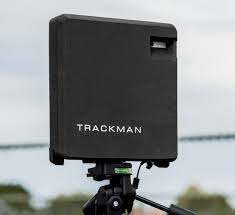
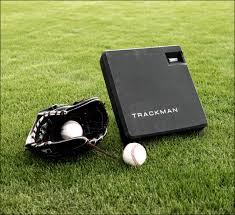
For example, most professional organizations use a Trackman unit. This device is used on the hitting and pitching sides of baseball. On the pitching side, it measures all of the important metrics.
First and foremost it measures velocity, which is crucial because, over a period of time, players can see if the program they are on is actually helping to improve and gain velocity. The Trackman also measures metrics like vertical and horizontal break, tilt, spin axis, and spin rate, which are all metrics that can contribute to pitch design.
Improving the movement on pitches can help shape a pitcher’s arsenal, which results in overall improvement. The Trackman also provides a graph that shows pitch location depending on the break and how pitches move relative to each other. This gives players an idea of how well their pitches play off each other and if their arsenal is conducive to getting outs.
On the hitting side of the ball, the Trackman is also heavily utilized. The unit measures important metrics like exit velocity, distance, and launch angle. The Trackman can help make sure players are not only creating good results in these three metrics, but also creating them consistently.
The Trackman provides clarity to a player, coach, or program to let them know if the work they are putting in is actually moving the needle forward, or if they have to adjust the program for that particular player. The feedback loop is now much more time efficient and productive to make a player the best that they can possibly be.
These tools are certainly changing the landscape of high school baseball. Almost any high school pitcher can find a facility near them that has a Trackman. The starting age for using these technologies is becoming lower and lower.
A pitcher that is serious about his development is putting himself behind the eight ball if he is not utilizing these technologies. Of course, it all depends on how the data is used. For example, a Trackman measures about 10 different metrics. Some metrics are more important to certain people, but everyone has almost the same top 5 — velocity, spin rate, spin axis, horizontal movement, and vertical movement.
A coach that has no idea how to read or interpret a Trackman, though, has virtually no use to a player and can actually harm a player’s development by making adjustments that are not beneficial. That is why it is crucial to have a coach or know as a player how to interpret these technologies because they can either sky rocket your development or make a player worse after wasting $20,000.